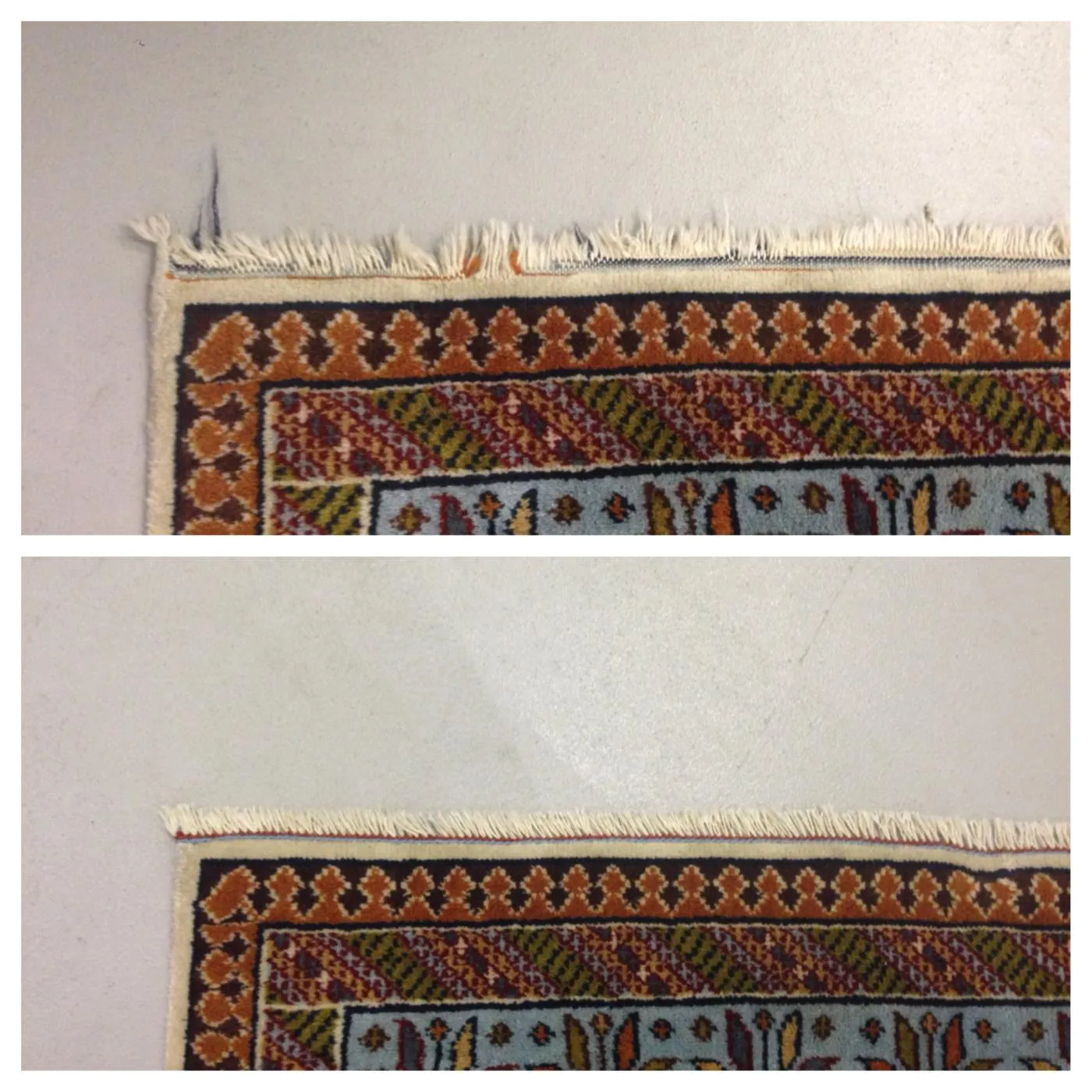
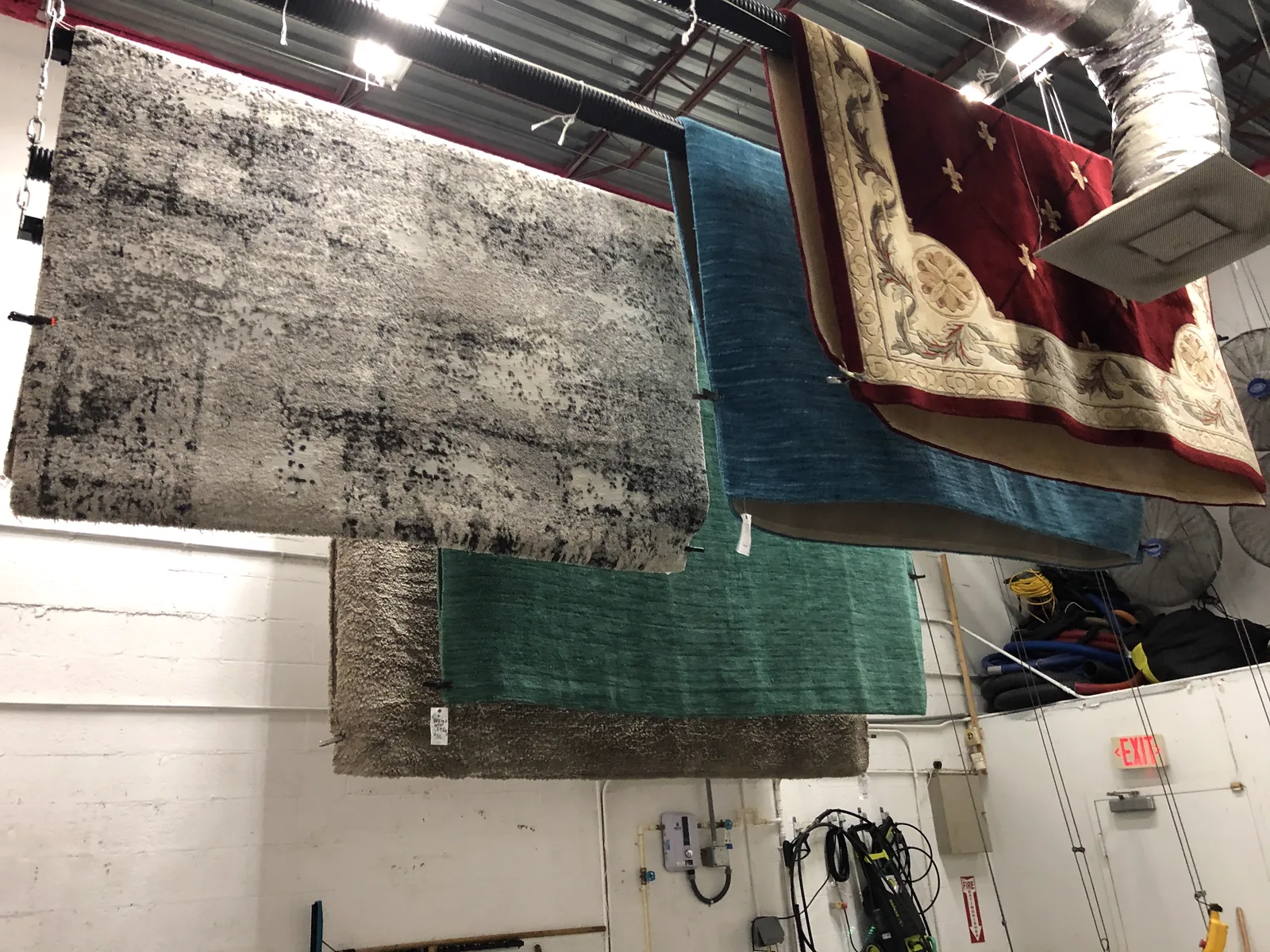
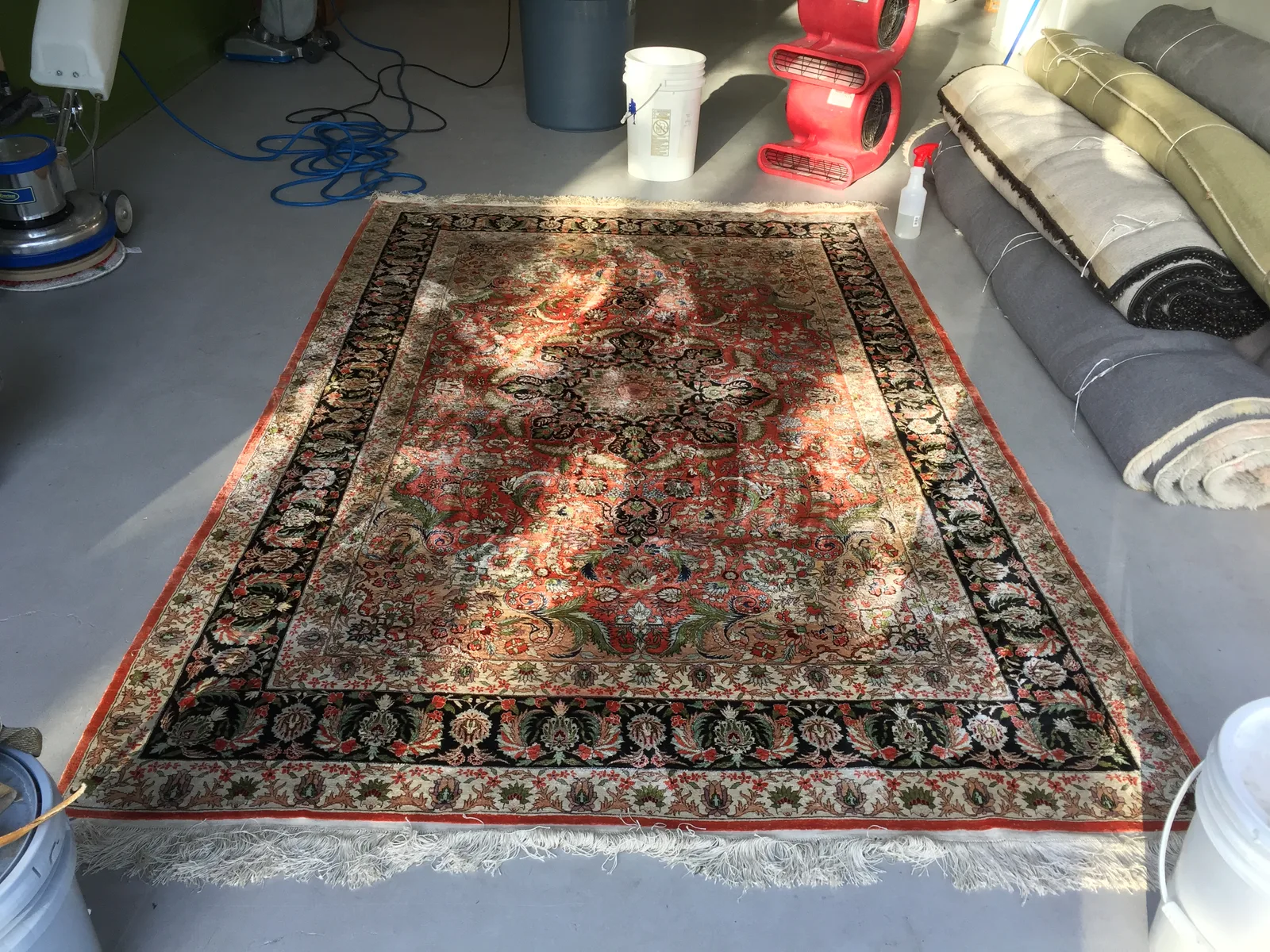
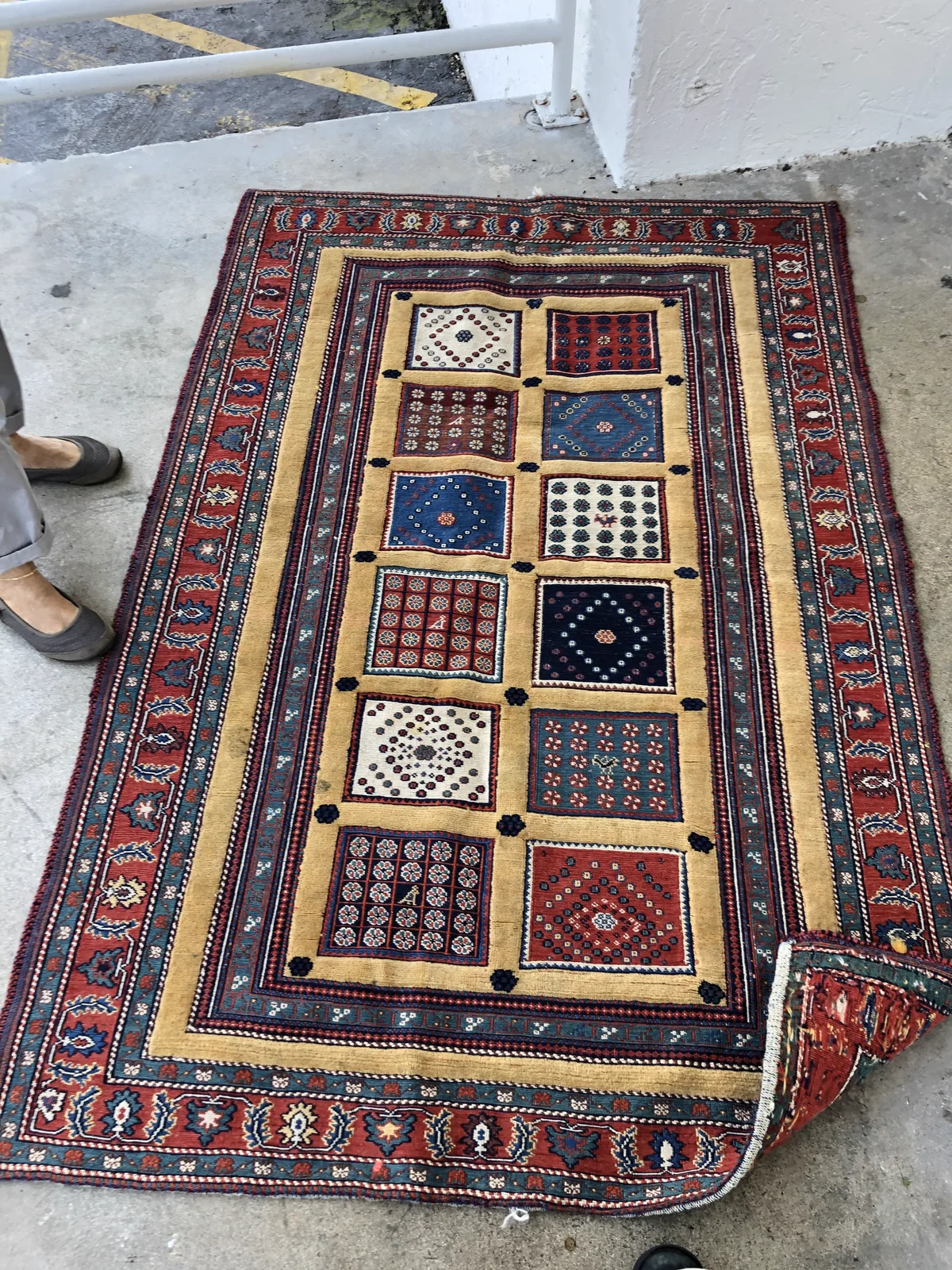
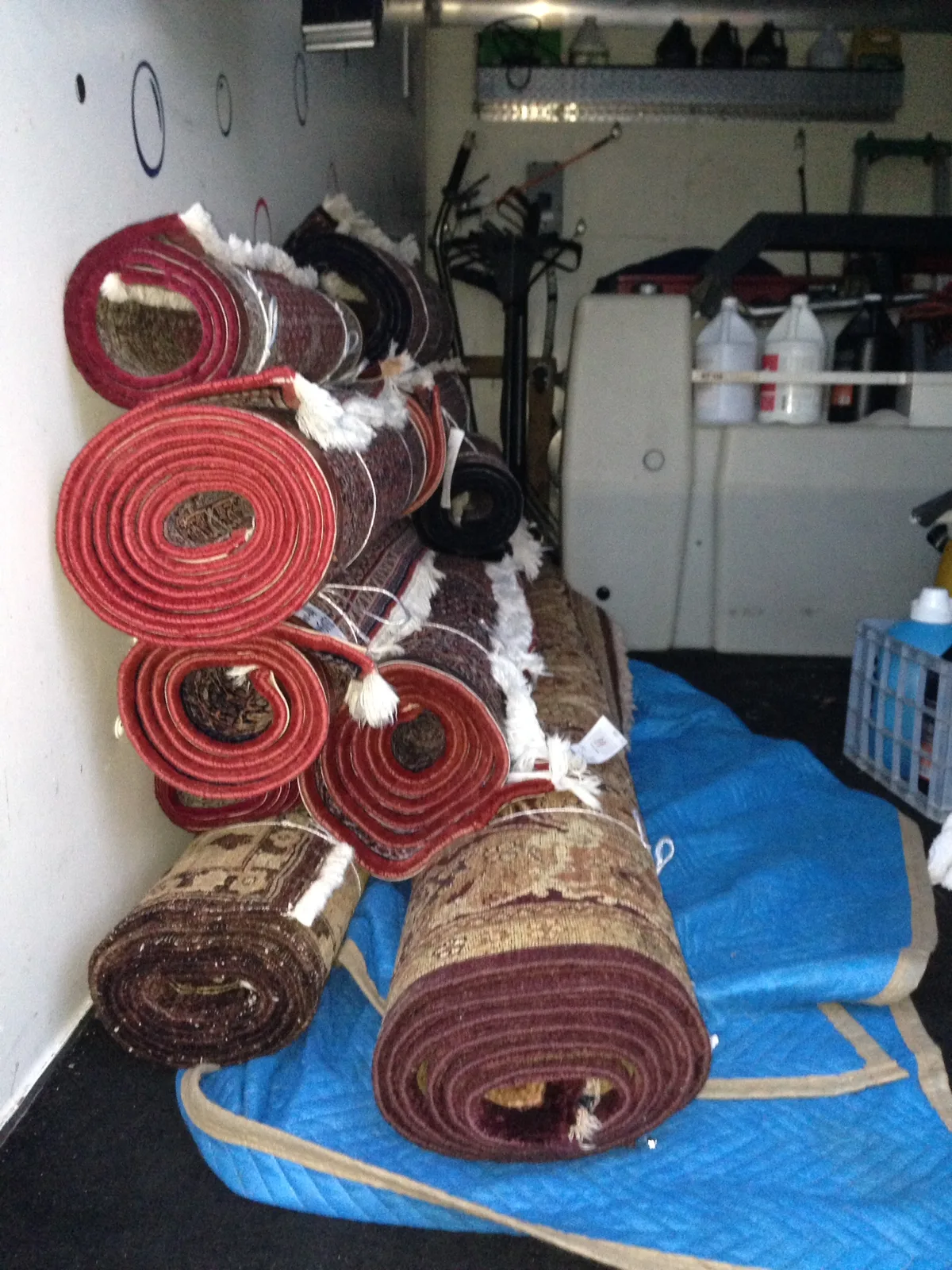
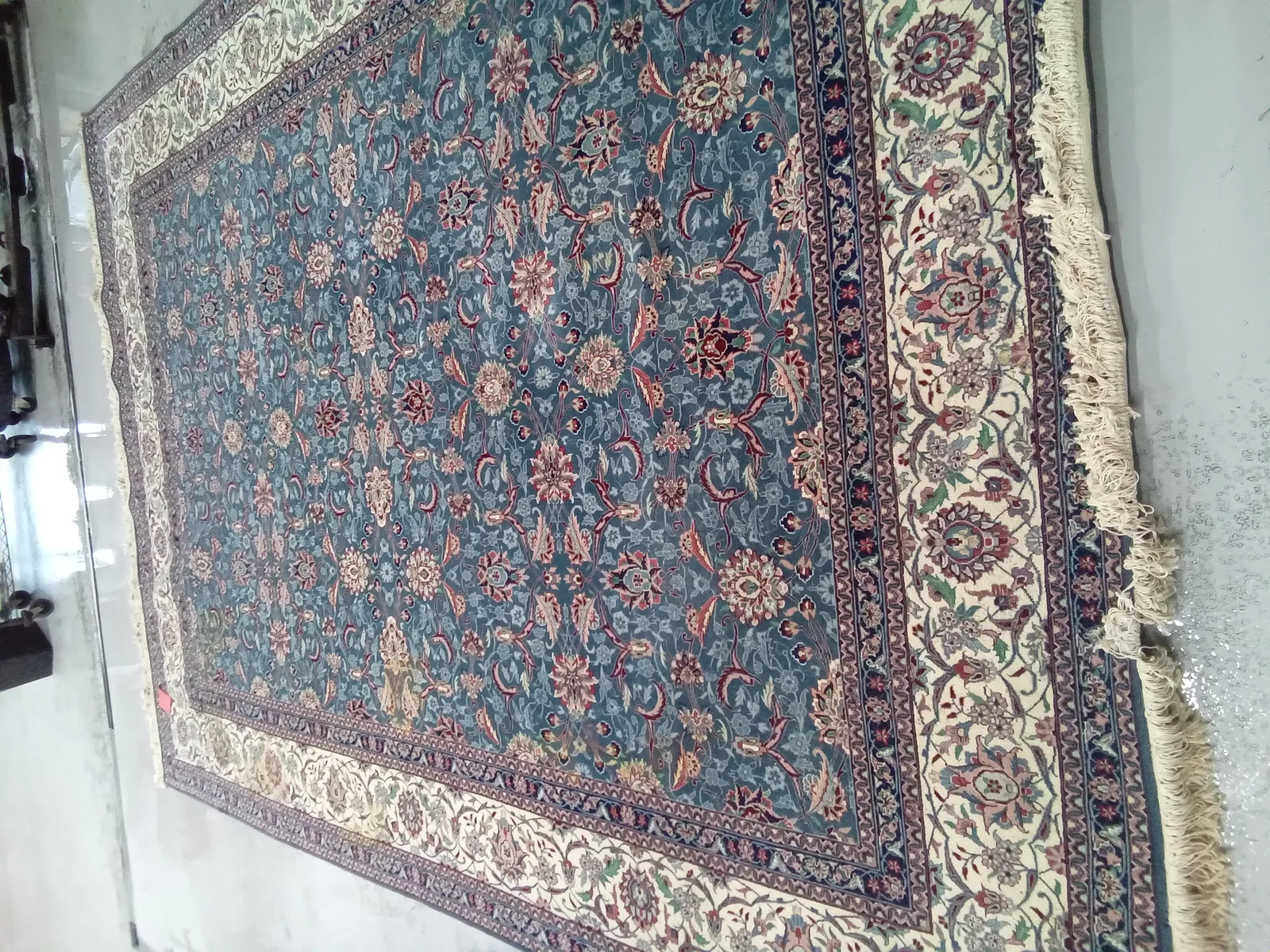
A frayed fringe or a small hole doesn’t mean the rug is finished. We rebuild rugs by hand at our own Aventura plant — the same place they’re washed — so the fix follows the weave instead of hiding it.
Kept in-house, worked by hand
A rug fails from its perimeter inward, so three of the six jobs on our bench are edge work. These are the ones we flag earliest.
The fringe is really the rug’s foundation poking through, not decoration. A loosening fringe gets secured, or a missing one rebuilt, so the end knots stay anchored.
The side cords absorb the punishment from vacuums and sliding furniture. Worn edges are re-wrapped and re-anchored by hand before the pile alongside them starts to give.
A hole or scorch is rebuilt knot by knot in matched wool, tracing the original pattern so the mend disappears into the design instead of sitting on top of it.
The heavier jobs
These take longer and get costed against what the rug is actually worth. All three are still done at our own bench.
Moths eat wool from the underside, where nothing shows. We clear the infestation first, then reweave the grazed and hollowed areas back to full pile.
A rug left damp against stone or tile can rot through the foundation until it cracks. We gauge how far the damage runs and rebuild the sound areas still worth saving.
A rug can be carefully shortened or narrowed to suit a room, and a worn antique revived through full restoration — always measured against the rug’s own value.
Cheap now, costly later
A rug comes apart from the edges inward. The end knots are held by the fringe and the side cords; once those fail, the pile next to them loses its anchor and marches off the rug one row at a time.
Spotted early, a loosening fringe or a fraying side is a small, contained job. Left through another season of traffic in a busy home, that same edge turns into lost knots needing a full reweave — much more work, and much more expense.
The least expensive repair is nearly always the earliest one.
So when early wear turns up during a cleaning inspection, we flag it — not to pad the bill, but because a stitch today spares a reweave tomorrow.
Keeping it off the bench
Most of the protection comes from a few small habits. Turn the rug a couple of times a year so a single path doesn’t absorb all the wear, and keep a proper pad beneath it — it stops the rug shifting and cushions the foundation against the hard marble and tile most Aventura condos sit on.
Keep it dry: blot spills quickly and never leave a wet rug lying, because the coastal humidity turns lingering damp into rot and mildew. And vacuum with a light touch, keeping the beater bar off the fringe, since that is where the unraveling tends to begin.
At the bench, by hand
Every repair is done by hand with a needle and matched yarn, using the same methods that built the rug. Nothing is glued, taped, or shipped to an outside workroom.
When we advise against it
Yes, and plainly. Some rugs are worth far more than any repair would cost; others are worth less than the hours a proper fix demands. You’ll know which of the two yours is before spending a thing.
A straight-dealing rug man points you off a needless repair as fast as onto a real one.
If a rug holds real sentimental value, the choice is yours to make — but you’ll make it knowing the true cost and the true outcome, not a sales pitch.
A straight read, no charge
Send a few details and we’ll collect the rug in Aventura, examine it, and give you a straight answer on the repair before any work starts.
Fringes, edges, holes, and worn pile — restored with hand work.